Hair Dye Chemicals and Gentler Color Options
What is in permanent hair dye, what labels like ammonia free really mean, and gentler color options with their honest tradeoffs.

Key takeaways
- Permanent dye uses PPD type precursors, peroxide and an alkalizer; PPD is a known contact allergen.
- "Ammonia free" usually swaps ammonia for ethanolamine and still contains dye precursors.
- Demi-permanent, semi-permanent and pure plant dyes trade coverage or range for fewer reactive ingredients.
- Avoid black henna, patch test every time, and see a dermatologist after any reaction.
Hair dye chemicals are where chemical free beauty runs into its hardest tradeoff. Permanent color covers gray reliably and lasts, and it does that with strong ingredients. Gentler options exist, from demi-permanent formulas to pure henna, but each gives up something in return. This guide lays out the main types of hair color, what is in them, and how to choose a gentler path that still gets you a result you like.
How permanent hair dye works
Permanent, or oxidative, hair color is a two part system. One part holds small dye precursors, most commonly p-phenylenediamine (PPD) or its relative toluene-2,5-diamine, along with couplers such as resorcinol. The other part is the developer, usually hydrogen peroxide. An alkaline ingredient, traditionally ammonia, opens the hair's outer layer. Once mixed, the precursors travel into the hair and react to form larger color molecules that stay trapped inside. The peroxide also lightens your natural pigment, which is why permanent color can go lighter as well as darker.
The main concerns with these ingredients are allergy and irritation. PPD is a well known contact allergen, and reactions can range from itching to severe swelling of the scalp and face. The main site's guide to PPD and resorcinol in permanent hair dye goes into the research, including what the International Agency for Research on Cancer has said about personal and occupational use.
What regulators say
In the United States, the FDA treats most oxidative hair dyes in an unusual way. Under federal law, "coal tar" hair dyes do not need FDA approval as color additives, as long as the label carries a caution statement and instructions for a preliminary patch test. That is why every box tells you to test first. In the European Union, regulators asked manufacturers for safety data on hair dye ingredients and banned a number of substances that lacked it, and they set concentration limits for many others, including PPD.
Your options, from strongest to gentlest
| Type | How it works | Lasts | Gray coverage | Things to know |
|---|---|---|---|---|
| Permanent | Oxidative dye plus peroxide and an alkalizer | Until it grows out | Full | Strongest allergy and irritation potential; patch test every time |
| "Ammonia free" permanent | Same chemistry, alkalizer is often ethanolamine (MEA) | Until it grows out | Full | Less odor, but still uses dye precursors and peroxide |
| Demi-permanent | Low peroxide, usually no ammonia | Several weeks | Blends gray | Cannot lighten; may still contain PPD type dyes |
| Semi-permanent | Ready made dyes coat and lightly enter the hair; no developer | A handful of washes | Tints or softens gray | Fewer reactive ingredients; check the label for allergens |
| Pure plant dyes | Henna, indigo, cassia bind to the hair's keratin | Henna is long lasting | Henna covers well, results vary | Limited color range; hard to change later |
Notice that "ammonia free" and "natural" on a box do not mean dye free. Read the ingredient list for PPD, toluene-2,5-diamine, resorcinol and related names before assuming a product is gentle.
A closer look at plant dyes
Henna
Pure henna comes from the dried leaves of Lawsonia inermis. It stains hair a red to copper tone, deeper on darker hair, and the color builds with repeat use. It coats and binds to hair rather than lifting your pigment, so it cannot make hair lighter. Many people find it leaves hair feeling thicker and glossier.
Indigo
Indigo from Indigofera tinctoria gives blue to black tones. Used after henna, or mixed with it, it creates browns and blacks. Results take practice and can vary from one batch of gray to another.
Cassia
Often sold as "neutral henna," cassia gives little color on dark hair and a faint golden tint on light or gray hair. People use it as a conditioning gloss.
Cautions with plant dyes
- Avoid "black henna." Products sold as black henna, especially for temporary tattoos, may contain added PPD at high levels. The FDA has warned about serious skin reactions from these. Real henna is never black.
- Watch for compound henna. Some henna products contain metallic salts or synthetic dyes. Metallic salts can react badly with bleach or later chemical color. Buy pure, single ingredient powders with clear labeling.
- Plan ahead. Henna is very hard to remove or lighten over. Tell your colorist about any henna use before a chemical service.
- Patch test anyway. Natural ingredients can cause allergies too. Our guide to patch testing applies here.
Lower exposure ideas that do not require giving up color
- Color less often. Root touch ups only, instead of full head color each time, reduce how much product touches your scalp.
- Keep it off the skin. Highlights and balayage are applied to hair away from the scalp, which some people with sensitive skin find easier to tolerate.
- Go demi or semi. If you mainly want to blend gray or refresh tone, a gentler formula may be enough.
- Embrace the gray, gradually. Many people transition with lowlights and a good cut, which softens the line as it grows.
- Protect your scalp. Colorists sometimes apply a barrier along the hairline; avoid scratching or exfoliating your scalp in the days before coloring.
Who should be most careful
Anyone who has reacted to hair dye before, or to a black henna tattoo, should talk with a dermatologist before coloring again, because PPD sensitivity can get worse with each exposure. People with eczema or a sensitive scalp, and anyone pregnant who has questions, should also check with a doctor. Never use hair dye on eyebrows or eyelashes; the FDA warns this can cause serious eye injury. Stop immediately and seek care if you notice swelling, blistering or difficulty breathing.
Caring for colored hair gently
After coloring, how you wash matters. A sulfate free shampoo, cooler water, and fewer washes each week can help color last. Dye and peroxide can leave hair drier and more porous, so a little oil on the ends helps; see natural hair oils by hair type for choosing one. If your scalp feels irritated after coloring, our page on natural scalp care has gentle first steps, and persistent itching deserves a dermatologist visit.
Our view
We do not make hair color, and we are not going to pretend there is a perfect chemical free dye that does everything permanent color does. What we can offer is a gentle routine around it: our Shampoo and Conditioner Bar for kind washing and our Hair Oil for dry, colored lengths. Choose the color approach that fits your comfort with the tradeoffs, test every time, and build the rest of your chemical free hair care routine around keeping hair and scalp calm.
From the ranch
Made in small batches, without the ingredients discussed above.
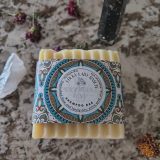 Shampoo and Conditioner BarPlastic free hair care with argan, castor and black seed oil.
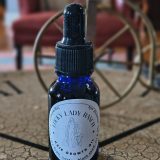 Hair OilSacha inchi, black seed, rice bran, argan and castor for hair and scalp.
Questions people ask
Is ammonia free hair dye safer?
It usually has less odor and may feel less harsh, but most ammonia free permanent dyes use ethanolamine instead, plus the same dye precursors and peroxide. Allergy risk from PPD type dyes remains.
Is henna a safe alternative to hair dye?
Pure henna from Lawsonia inermis is a gentler option for many people, but it gives a limited color range and is hard to change later. Avoid black henna, which may contain PPD, and patch test first.
Why do I need to patch test hair dye every time?
Allergy to hair dye ingredients can develop after many uses without problems. A test before each coloring helps catch a new sensitivity before it affects your whole scalp.
Can I dye my hair if I react to it?
Talk with a dermatologist first. Reactions to PPD can get worse with each exposure, and a dermatologist can help identify which ingredient caused it.
Sources and further reading
- US Food and Drug Administration (FDA), Hair Dyes
- US Food and Drug Administration (FDA), Temporary Tattoos, Henna/Mehndi, and "Black Henna": Fact Sheet
- International Agency for Research on Cancer (IARC), Monographs Volume 99: Some Aromatic Amines, Organic Dyes, and Related Exposures
- European Commission, Scientific Committee on Consumer Safety (SCCS), hair dye substance assessments
- National Cancer Institute (NCI), Hair Dyes and Cancer Risk
This guide is for general education and is not medical advice. If you have a skin condition, allergy, or are pregnant or nursing, talk with your doctor or a board certified dermatologist about the products that are right for you.