What Is Chemical Free Beauty? Beyond the Buzzword
Everything is made of chemicals, so what does chemical free beauty actually mean? A plain, practical definition and a simple way to use it when you shop.

Key takeaways
- Everything, including water and plant oils, is a chemical, so chemical free beauty really means free of harsh synthetic additives.
- There is no legal definition of chemical free, natural or clean for cosmetics in the US, so the ingredient list matters more than the front label.
- A useful working rule: short ingredient lists, recognizable plant and mineral ingredients, and no fragrance you cannot identify.
- Start with the products that stay on your face longest, like moisturizer, sunscreen and lip balm, rather than replacing everything at once.
If you have ever rolled your eyes at the phrase chemical free beauty, you are in good company. Water is a chemical. So is shea butter, and so is the vitamin E in your face oil. Taken literally, the phrase makes no sense. Yet millions of people search for it every month, and they are not confused. They are asking a reasonable question in everyday language: how do I care for my face, hair and nails without a cabinet full of harsh synthetic additives I cannot pronounce or explain?
This guide gives the phrase an honest meaning you can actually use at the store or online, and it shows how we use it across this site.
The honest definition
On Chemical Free Beauty, we use the term to mean beauty products made without harsh synthetic additives, especially the ones that are common irritants, that regulators in some countries restrict, or that exist mainly for cost, shelf appeal or texture rather than for your skin. It does not mean a product with no chemistry in it. Soap is the result of a chemical reaction between oils and lye. Zinc oxide is a mineral compound. A good facial oil is a blend of fatty acids. All of these fit comfortably inside chemical free beauty as we mean it.
What usually sits outside it:
- Undisclosed synthetic fragrance listed only as "fragrance" or "parfum"
- Strong preservatives with high allergy rates, such as methylisothiazolinone and formaldehyde releasers
- Harsh sulfate detergents in face washes and shampoos
- Petroleum based fillers used mainly for texture
- Persistent additives like PFAS in long wear makeup and cyclic silicones
- Synthetic dyes that add nothing but color to a cleanser or toner
For the full list as it applies to your face, see our guide to face care ingredients to avoid.
Why the label alone will not tell you
In the United States, the Food and Drug Administration does not define "natural," "clean," "non toxic" or "chemical free" for cosmetics. A brand can print any of them on a bottle that also contains a long list of synthetic additives. The front of the package is marketing. The back of the package, the ingredient list, is where the useful information lives.
Ingredient lists on cosmetics sold in the US are generally ordered from the highest amount to the lowest, down to ingredients present at 1 percent or less, which can appear in any order. That gives you a quick reading trick: the first five ingredients usually make up most of the product. If water, a silicone and a synthetic emollient lead the list and the plant oil you were promised shows up near the end after the preservative, you know roughly how much of that oil you are paying for. Our main site has a deeper walkthrough of how to read a cosmetic ingredient label if you want to go further.
A simple three question test
When you are standing in an aisle or scrolling a product page, you do not need a chemistry degree. Ask three questions:
- Can I tell what most of these ingredients are? Names like Simmondsia chinensis (jojoba) seed oil look intimidating, but they are just Latin plant names. You can recognize them quickly once you know the pattern. A wall of numbered polymers and preservatives is a different story.
- Is the fragrance identified? "Fragrance" alone can stand for a blend of many undisclosed components. Products scented with named essential oils, or unscented products, are easier to judge.
- Does each ingredient seem to have a job for my skin or hair? Oils, butters, waxes, clays and plant extracts nourish, protect or cleanse. Many synthetic additives exist to make a product cheaper, foamier, shinier or longer lasting on a shelf.
Three yes answers do not guarantee a product suits you, but they remove most of the guesswork.
Chemical free beauty, from the neck up
This site focuses on three areas, each with its own trade offs.
| Area | Where harsh additives tend to hide | Simpler direction |
|---|---|---|
| Skincare | Fragranced cleansers, foaming washes, leave on creams with strong preservatives | Gentle cleansing, plant oils and balms, mineral sun protection |
| Makeup | Long wear and waterproof formulas, talc based powders, bright synthetic pigments | Shorter ingredient lists, mineral pigments, gentle removal |
| Hair and nails | Sulfate shampoos, silicone heavy conditioners, permanent dyes, nail polish solvents | Shampoo bars, light oils, gentler color, simple cuticle care |
Makeup is often the hardest place to go fully simple, because performance expectations are high. Our guide to chemical free makeup covers what to look for there, and the chemical free hair care routine does the same for hair.
What chemical free beauty does not promise
Being honest matters here, because the term is easy to oversell.
- Natural is not automatically gentle. Essential oils, plant extracts and even beeswax can cause reactions in some people. Patch testing still matters. Our patch testing guide shows how to do it properly.
- Synthetic is not automatically harmful. Some lab made ingredients are well studied and considered safe at the levels used. The goal is to skip the ones with real reasons for caution, not to fear every long word.
- Simple products can spoil. Formulas without strong preservatives usually need cooler storage and a shorter use window. Anhydrous products, meaning those with no water, such as oils and balms, tend to keep better than lotions.
- It is not medical care. If you have a skin condition such as eczema, rosacea or severe acne, a dermatologist is the right first stop.
Where to start
You do not need to throw everything out this weekend. A gradual approach is kinder to your skin and your budget.
- Start with leave on products. A moisturizer, face oil, lip balm or sunscreen stays on your skin for hours, so it is a sensible first swap. Rinse off products matter too, but they spend less time on you.
- Replace items as they run out. When your cleanser is empty, choose a simpler one. Our list of ten easy clean skincare swaps gives ideas for each step.
- Cut the extras. Many people find their skin settles when they use fewer products. The minimalist skincare approach explains how to pare down without missing anything important.
- Introduce one new product at a time. Give each new item a week or two so you can tell how your skin responds.
A simple first kit might be a gentle bar or oil cleanser, a plant based face oil such as our jojoba and rosehip Beauty Oil, a beeswax lip balm and a mineral sun product. That covers cleansing, moisture, lips and daytime protection with short, readable ingredient lists.
Why we care about this
This site is written by the family behind Lucky Lady Ranch, where we make soaps, oils and balms in small batches. Our guiding idea is that what you leave out of a product matters as much as what you put in. Chemical free beauty, in the honest sense, is just that idea applied to your face, makeup, hair and nails: fewer, better ingredients, chosen on purpose, and a routine calm enough that you can tell what each step is doing.
From the ranch
Made in small batches, without the ingredients discussed above.
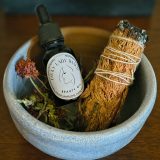 Beauty OilSeven plant oils for a soft, dewy, healthy looking face.
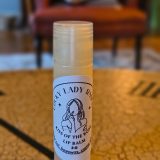 Lip BalmLip Love: our beauty oil blend with shea, cocoa butter and beeswax.
 Beauty BarA gentle facial bar with rosehip, prickly pear and vitamin E.
Questions people ask
Is chemical free beauty actually possible?
Not literally, since every ingredient, including water and plant oils, is a chemical. In practice the phrase describes products made without harsh synthetic additives such as undisclosed fragrance, strong irritating preservatives, harsh sulfates and petroleum fillers.
Is chemical free the same as clean beauty?
They overlap a lot. Both are marketing terms with no legal definition in the US. Clean beauty sometimes allows more synthetic ingredients that a brand considers safe, while chemical free usually leans toward plant and mineral ingredients. Either way, read the ingredient list.
Are natural beauty products always safer?
No. Natural ingredients can still irritate or cause allergies, and essential oils are a common example. Natural products are often simpler and easier to evaluate, but patch testing and reading labels still matter.
What should I switch first to go chemical free?
Start with leave on products that stay on your skin the longest, like moisturizer, face oil, lip balm and sunscreen. Then replace cleansers, makeup and hair products as they run out.
Sources and further reading
- US Food and Drug Administration (FDA), Cosmetics Labeling Guide
- US Food and Drug Administration (FDA), "Natural" on Cosmetics Labels
- American Academy of Dermatology (AAD), How to Test Skin Care Products
- European Commission, Regulation (EC) No 1223/2009 on Cosmetic Products
This guide is for general education and is not medical advice. If you have a skin condition, allergy, or are pregnant or nursing, talk with your doctor or a board certified dermatologist about the products that are right for you.