Chemical Free Makeup: What to Look For
A practical shopper's guide to chemical free makeup: how to read the label, which ingredients to skip, and how to build a smaller, simpler makeup bag.

Key takeaways
- Chemical free makeup really means makeup without harsh synthetic additives, since every pigment and oil is itself a chemical.
- The ingredient list matters more than the front of the package, because terms like clean and natural are not legally defined.
- Shorter formulas built on minerals, plant oils, butters and waxes are usually easier to evaluate and easier on sensitive skin.
- Switch gradually: replace each product as it runs out, starting with the ones you wear daily and closest to your eyes and lips.
Shopping for chemical free makeup can feel like reading a foreign language at the drugstore. Every package promises something, and very few explain what is actually inside. This guide is the practical version: what to look for on the label, what to set aside, and how to build a small makeup bag you trust.
First, an honest note. Everything is a chemical, including iron oxide pigment, beeswax and water. When we talk about chemical free beauty, we mean products made without the harsh synthetic additives many people prefer to skip, such as certain preservatives, synthetic fragrance, PFAS and petroleum heavy bases. Our overview of what chemical free beauty really means explains the idea in more depth.
Why makeup deserves a closer look
Makeup is different from a rinse off cleanser. It sits on your skin for 8 to 16 hours, it is applied near the eyes and on the lips, and some of it is swallowed or rubbed into the eyes over the course of a day. A little lip color is eaten with every meal. Powder can be inhaled when you apply it with a big fluffy brush. That long, close contact is why many people start their clean routine with makeup rather than body wash.
Makeup also tends to be engineered for performance: long wear, transfer resistance, water resistance, a blurred finish. Those claims often depend on film formers, synthetic polymers and fluorinated ingredients, which are exactly the ones worth reading about before you buy.
The label: what to read and what to ignore
Words like clean, natural, nontoxic and green have no legal definition for cosmetics in the United States. A brand can print them on anything. What is regulated is the ingredient list, which must name ingredients in descending order of amount (ingredients under 1 percent can appear in any order at the end), followed by color additives.
- Read the first five ingredients. They make up most of the product. In a simple lip tint you might see castor oil, beeswax, shea butter and jojoba oil. In a long wear formula you may see isododecane, trimethylsiloxysilicate and dimethicone instead.
- Look for "parfum" or "fragrance." One word can stand for dozens of undisclosed components. Unscented makeup is easy to find and kinder to sensitive eyes.
- Check the colors at the end. Mineral pigments are listed as CI 77491, CI 77492 and CI 77499 (iron oxides), CI 77891 (titanium dioxide) and CI 77019 (mica). Synthetic dyes appear as names like Red 7 Lake or CI 15850.
- Notice the preservative. Any product with water needs one. A gentle, well chosen preservative is better than a contaminated product, so the goal is not "no preservative" but "a preservative you are comfortable with."
Ingredients many shoppers skip
We cover each of these in detail in makeup ingredients to avoid, but here is the short list that appears most often in makeup specifically:
| Ingredient group | Where it shows up in makeup | Label names to watch for |
|---|---|---|
| PFAS | Long wear foundation, waterproof mascara, liquid lipstick | PTFE, anything with "perfluoro" or "polyfluoro" |
| Formaldehyde releasers | Liquid foundation, mascara, eyeliner | DMDM hydantoin, quaternium-15, imidazolidinyl urea |
| Synthetic fragrance | Lipstick, primer, setting spray | Fragrance, parfum, aroma |
| Talc | Pressed powder, blush, eyeshadow | Talc, CI 77718 |
| Cyclic silicones | Primer, foundation, liquid lipstick | Cyclopentasiloxane, cyclohexasiloxane |
| Certain parabens | Cream and liquid products | Propylparaben, butylparaben |
Regulators do allow most of these within set limits, and the risk from any single product is generally considered low. Many people simply prefer to reduce their total exposure across a full daily routine, and makeup is an easy place to do that.
What good chemical free makeup tends to look like
Simple formulas share a family resemblance. You will often see:
- Mineral pigments such as iron oxides, mica and zinc oxide for color and coverage. Our guide to mineral makeup benefits and limits explains what they do well and where they fall short.
- Plant oils and butters such as jojoba, castor, shea and cocoa butter for slip and comfort.
- Natural waxes such as beeswax or candelilla to hold a stick or balm together.
- Powder bases like arrowroot, corn starch, kaolin clay or silica instead of talc.
- Short lists. A cream blush with eight ingredients is far easier to evaluate than one with forty.
Expect some tradeoffs. Clean mascara may smudge a little more in humid weather. A balm based lip color will need reapplying after lunch. Many people find that is a fair exchange for products that feel lighter and simpler on the skin.
A five step plan for switching
- Take inventory. Line up everything in your makeup bag and toss anything past its prime. Our makeup shelf life guide lists how long each product type usually lasts once opened.
- Start with daily, close contact products. Lip color and mascara are worn often and sit near the mouth and eyes, so they are sensible first swaps.
- Replace as things run out. There is no need to throw away a half used foundation. Gradual change is gentler on your budget and creates less waste.
- Patch test each new product. Natural ingredients can still irritate. Our steps for patch testing new skincare work for makeup too.
- Simplify the routine around it. Good skin prep means you need less coverage. A few drops of a plant oil under a tinted balm can do more than a heavy foundation.
Where skincare and makeup meet
The most effective clean makeup trick is not a product at all. Well cared for skin looks even without much coverage. A gentle cleanse, a light layer of a facial oil such as our jojoba and rosehip Beauty Oil, and a lip balm often replace primer, a second layer of foundation and a separate lip gloss. If you would like tinted color without the long list of film formers, the red version of our beeswax Lip Balm gives a sheer wash of color in a base of oils, butters and beeswax.
At the end of the day, removal matters as much as application. Scrubbing at long wear makeup with harsh wipes undoes much of the benefit of choosing gentler products. See our guide to removing makeup without harsh chemicals for an easy evening routine.
A calmer makeup bag
Choosing chemical free makeup is not about perfection or fear. It is about reading a little more closely, keeping what works and quietly letting go of what you do not need. At Lucky Lady Ranch we believe what you leave out matters as much as what you put in, and that idea applies to a lipstick as much as a bar of soap. A few honest products, chosen with care, are usually all a face needs.
From the ranch
Made in small batches, without the ingredients discussed above.
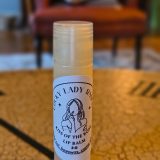 Lip BalmLip Love: our beauty oil blend with shea, cocoa butter and beeswax.
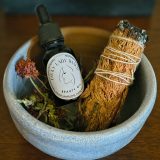 Beauty OilSeven plant oils for a soft, dewy, healthy looking face.
Questions people ask
Is there such a thing as chemical free makeup?
Not literally, since pigments, oils and waxes are all chemicals. The phrase is shorthand for makeup made without harsh synthetic additives such as PFAS, formaldehyde releasing preservatives and synthetic fragrance, usually built on minerals, plant oils and natural waxes.
How can I tell if makeup is clean?
Ignore the front of the package and read the ingredient list. Look for short formulas based on minerals, oils and waxes, and check for fragrance, PTFE or fluoro ingredients, formaldehyde releasers and cyclic silicones.
Is mineral makeup the same as clean makeup?
Not always. Mineral describes the pigments, but a mineral foundation can still contain talc, fragrance, bismuth oxychloride or synthetic preservatives. Always check the full list.
Does clean makeup last as long as conventional makeup?
Usually not quite as long. Long wear and waterproof claims often rely on synthetic film formers or fluorinated ingredients. Many people accept a little reapplication in exchange for a simpler formula.
Which makeup products should I switch first?
Start with products you wear daily near your mouth and eyes, such as lip color and mascara. Replace the rest gradually as each product runs out.
Sources and further reading
- US Food and Drug Administration (FDA), Cosmetics Labeling Guide
- US Food and Drug Administration (FDA), Color Additives Permitted for Use in Cosmetics
- Modernization of Cosmetics Regulation Act of 2022 (MoCRA)
- European Commission, Regulation (EC) No 1223/2009 on cosmetic products
- Whitehead HD et al., Fluorinated Compounds in North American Cosmetics, Environmental Science and Technology Letters (2021)
This guide is for general education and is not medical advice. If you have a skin condition, allergy, or are pregnant or nursing, talk with your doctor or a board certified dermatologist about the products that are right for you.