Makeup Ingredients to Avoid
A product by product checklist of makeup ingredients to avoid, with the label names to watch for and simpler alternatives that do the same job.

Key takeaways
- Different makeup products carry different concerns, so a product by product checklist is more useful than one long list of scary names.
- PFAS, formaldehyde releasers, synthetic fragrance, talc and cyclic silicones are the ingredients makeup shoppers most often choose to skip.
- Lip and eye products deserve the closest reading, because lip color is partly swallowed and eye products sit next to a sensitive membrane.
- Most of these ingredients are legal within limits; avoiding them is a reasonable personal choice about total exposure, not an emergency.
Most lists of makeup ingredients to avoid read like a chemistry exam: forty names, no context, and no way to use it in a store aisle. This guide takes a different approach. It sorts the concerns by product type, so you know exactly what to check on the foundation, the mascara and the lipstick in your hand.
A quick, honest framing first. Regulators in the United States and Europe allow most of these ingredients within set limits, and a single product is unlikely to cause harm for most people. People who choose chemical free beauty are usually thinking about their total exposure from many products worn every day, plus irritation and allergy risk. That is a reasonable way to shop, and it does not require fear.
The short list that applies to almost everything
- Fragrance or parfum. A single label term that can cover many undisclosed components, and one of the most common causes of cosmetic contact allergy. Makeup rarely needs scent.
- Formaldehyde releasing preservatives. DMDM hydantoin, quaternium-15, imidazolidinyl urea, diazolidinyl urea and sodium hydroxymethylglycinate slowly release small amounts of formaldehyde, a known skin sensitizer. Our main site guide to formaldehyde releasing preservatives covers the research.
- PFAS. Fluorinated ingredients used for long wear and water resistance. See PFAS free makeup for label names.
- Longer chain parabens. Propylparaben and butylparaben have shown weak estrogen-like activity in lab studies and are more tightly limited in the EU than methylparaben.
Foundation, concealer and primer
Liquid face products are usually water based emulsions, so they need preservatives and often contain more synthetic helpers than any other item in your bag.
- Cyclic silicones (cyclopentasiloxane, cyclohexasiloxane) give that silky, quick drying feel. The EU has restricted them because of environmental persistence. They evaporate off the skin, so the concern is mostly environmental rather than direct harm.
- PEG compounds (PEG-10 dimethicone and similar) can carry traces of 1,4-dioxane from manufacturing.
- Chemical UV filters such as oxybenzone are sometimes added for an SPF claim. If you want sun protection in your base, zinc oxide is the simplest option.
- Acrylates copolymers and other film formers help with transfer resistance. They are generally considered low risk on skin, but they are part of why long wear formulas can feel tight and are harder to remove.
Powder, blush, bronzer and eyeshadow
- Talc is the classic powder base. Cosmetic talc is supposed to be asbestos free, but contamination has been found in some products. Many shoppers now choose talc free makeup made with mica, silica, kaolin clay or arrowroot.
- Bismuth oxychloride gives a pearly finish. It is not considered toxic, but some people find it itchy, especially in mineral foundations.
- Coal tar and synthetic dyes appear as names like Red 40, Yellow 5 Lake or CI 45410. These are FDA approved color additives, but some are not permitted around the eyes, and some people react to them. Iron oxides and ultramarines are simpler alternatives.
- Loose powder, used carelessly. Any fine powder can be inhaled. Tap off the excess, use a smaller brush, and avoid spraying or puffing powder near your face.
Mascara and eyeliner
The eye area is the most sensitive place you apply makeup, and products here are applied close to a mucous membrane.
- Formaldehyde releasers and fragrance are the main irritation risks in mascara.
- PFAS are common in waterproof and long wear formulas.
- Thimerosal, a mercury based preservative, is allowed by the FDA at low levels only in eye area products when no other preservative works. It is rare today, but worth recognizing.
- Kohl, kajal or surma sold as traditional eyeliner can contain lead. The FDA warns against these products, and kohl is not an approved color additive in the United States.
For more on choosing eye products that behave well around sensitive eyes, see clean mascara and eye makeup for sensitive eyes.
Lipstick, gloss and lip tint
Some portion of lip product is swallowed over a day, which is why lips deserve a careful read.
- Trace heavy metals such as lead can appear in pigments. The FDA recommends a maximum lead level for lip products, and most tested lipsticks fall well below it. Our article on lipstick and heavy metals explains what that means in practice.
- Petrolatum and mineral oil are common bases. Well refined grades are considered safe, but many people prefer plant oils and beeswax.
- Synthetic flavor and fragrance make a gloss smell like candy and are a frequent cause of lip irritation.
- BHA, a synthetic antioxidant, is sometimes used to keep oils fresh. Vitamin E (tocopherol) does a similar job.
A pocket checklist
| Product | Check for | Simpler choice |
|---|---|---|
| Foundation | Fragrance, cyclopentasiloxane, PTFE, formaldehyde releasers | Mineral pigments, plant oils, a gentle preservative |
| Powder and shadow | Talc, bismuth oxychloride, dyes near eyes | Mica, kaolin, arrowroot, iron oxides |
| Mascara | Fragrance, perfluoro ingredients, DMDM hydantoin | Unscented, washable, short list |
| Lip color | Fragrance or flavor, BHA, petrolatum | Beeswax, castor oil, shea, iron oxides |
Reading "free from" claims with care
Front of pack claims such as "paraben free" or "fragrance free" are helpful, but they only tell you what was left out, not what replaced it. A paraben free foundation might rely on a formaldehyde releaser instead, and an "unscented" product can still contain a masking fragrance to cover the smell of raw materials. "Fragrance free" is the clearer term to look for. When a claim matters to you, confirm it on the ingredient list, which is the part of the package the law actually governs.
It also helps to know which ingredients are usually fine. Iron oxides, mica, zinc oxide, beeswax, candelilla wax, jojoba oil, castor oil, shea butter and tocopherol show up in many simple formulas and are well tolerated by most people.
What to do with this list
You do not need to throw everything away tonight. Read the products you use most, replace the ones that concern you as they run out, and favor short ingredient lists. If you have reactive skin, a dermatologist can help with patch testing to find your personal triggers. Many face care ingredients overlap with makeup ingredients, so our list of face care ingredients to avoid is a useful companion.
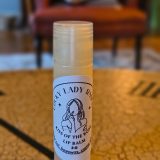
Lucky Lady Ranch does not make makeup, but we make the simple products that often sit beside it. Our Lip Balm is made with plant oils, shea, cocoa butter and beeswax, with no synthetic fragrance or flavor, and it works as a soft base under lip color or on its own. Leaving harsh ingredients out has always been the point.
From the ranch
Made in small batches, without the ingredients discussed above.
Questions people ask
What is the most harmful ingredient in makeup?
There is no single answer, since risk depends on the amount and how it is used. Ingredients most often avoided are PFAS, formaldehyde releasing preservatives, synthetic fragrance and talc that may be contaminated with asbestos.
What ingredients should I avoid in foundation?
Many shoppers skip fragrance, formaldehyde releasers such as DMDM hydantoin, PTFE and other fluoro ingredients, cyclic silicones like cyclopentasiloxane, and PEG compounds that can carry 1,4-dioxane traces.
Is dimethicone in makeup bad?
Dimethicone is a non volatile silicone generally considered safe and non irritating on skin. Some people avoid it because it can feel heavy or build up. Cyclic silicones raise more environmental concern than dimethicone.
Are synthetic dyes in makeup safe?
Colors in US cosmetics must be FDA approved for their intended use, and some are not allowed near the eyes. They are considered safe at approved uses, but some people react to them and prefer mineral pigments.
Why is fragrance in makeup a concern?
Fragrance is one of the most common causes of cosmetic contact allergy, and the single word can stand for many undisclosed components. Makeup does not need scent to work, so unscented is an easy swap.
Sources and further reading
- US Food and Drug Administration (FDA), Prohibited and Restricted Ingredients in Cosmetics
- US Food and Drug Administration (FDA), Kohl, Kajal, Al-Kahal, Surma, Tiro, Tozali, or Kwalli: By Any Name, Beware of Lead Poisoning
- US Food and Drug Administration (FDA), Guidance for Industry: Lead in Cosmetic Lip Products and Externally Applied Cosmetics
- European Commission, Regulation (EC) No 1223/2009 on cosmetic products, Annexes II and V
- American Contact Dermatitis Society, Contact Allergen Management Program
- Code of Federal Regulations, 21 CFR 700.13, Use of mercury compounds in cosmetics
This guide is for general education and is not medical advice. If you have a skin condition, allergy, or are pregnant or nursing, talk with your doctor or a board certified dermatologist about the products that are right for you.