Minimalist Skincare: Fewer Products, Calmer Skin
More steps do not always mean better skin. Minimalist skincare pares your routine down to what your skin actually needs, and often leaves it calmer.

Key takeaways
- Most skin needs three things: gentle cleansing, moisture and daytime sun protection.
- Using many products at once raises the chance of irritation and makes it harder to know what is working.
- Cut down gradually by removing one product at a time and watching how your skin responds.
- A minimal routine saves money, shelf space and packaging, and pairs naturally with chemical free beauty.
At some point many of us looked at a bathroom shelf crowded with toners, essences, serums, eye creams and three kinds of moisturizer and wondered whether all of it was helping. Minimalist skincare, sometimes called skin minimalism or "skinimalism," starts from a simple idea: use only the products your skin actually needs, and let the rest go. For many people the result is calmer skin, a shorter morning and a lot less to think about.
Why less can be better
Every product you add brings its own list of ingredients. Layer seven products and your skin may meet fifty or more ingredients a day, including several preservatives and often fragrance in more than one item. More ingredients mean more chances for irritation or allergy, and when a reaction does happen, it is hard to tell which product caused it.
There is also the question of overdoing it. Using several exfoliating or active products together can leave skin red, tight and reactive. Many dermatologists recommend simplifying when skin is irritated, and a short routine makes that easy.
Minimalism fits naturally with chemical free beauty. When you use fewer products, each one deserves a careful look at its ingredient list, and it is easier to choose ones with short, readable labels.
The three essentials
Strip any routine down to its core and you get three steps:
- Cleanse gently. Remove dirt, sunscreen and makeup without stripping. One gentle cleanser or a cleansing oil is enough.
- Moisturize. Help skin hold onto water and feel comfortable. A few drops of facial oil or a simple cream.
- Protect from the sun. Every morning, as the last step. This is the step dermatologists most often say not to skip.
That is it. Everything else is optional and should earn its place.
What a minimal routine can look like
| Skin type | Morning | Night |
|---|---|---|
| Dry | Water rinse, face oil, mineral sun protection | Oil cleanse, face oil, balm on dry spots |
| Oily | Quick gentle wash, mineral sun protection | Oil cleanse plus short wash, one drop of light oil |
| Normal or combination | Water rinse, a drop or two of oil on cheeks, sun protection | Oil cleanse, face oil |
| Sensitive | Water rinse, unscented oil, mineral sun protection | Gentle cleanse, the same unscented oil |
Notice that a single facial oil can serve as moisturizer, makeup remover and night treatment. That is the heart of a minimalist kit. Our chemical free skincare routine walks through each step in more detail.
How to cut down without shock
Going from ten products to three overnight is possible, but a gradual approach tells you more.
- List everything you use and what you think each product does.
- Group by job. If you have three products that moisturize, you probably need one.
- Remove one product a week. Start with the ones you are least sure about, such as toners, mists or a second serum.
- Watch your skin. If nothing changes, you did not need it. If something gets worse, bring it back and try removing something else.
- Finish, then do not replace. Use up what you have rather than throwing it out, and simply do not rebuy the extras.
Products that are usually optional
- Toners. Older toners were designed to remove soap residue. Many modern ones are mostly water and fragrance.
- Separate eye creams. The same gentle oil or moisturizer you use on your face usually works around the eyes, in a smaller amount.
- Multiple serums. If you love one, keep one. Layering several adds cost and irritation risk.
- Makeup wipes. A cleansing oil and a washable cloth do the job with less waste. See gentle makeup removal.
- Daily scrubs. Most skin needs gentle exfoliation once or twice a week at most, if at all.
When one more product is worth it
Minimalism is not a rule against adding things. It is a habit of asking whether each product solves a real problem. Some worthwhile additions:
- A balm for very dry patches in winter
- A clay mask once a week for an oily T zone
- A treatment recommended by your dermatologist for a specific condition
- A lip balm, which almost everyone uses daily anyway
Choosing your few products well
With fewer products, quality matters more. Look for:
- Short ingredient lists you can mostly recognize
- No undisclosed "fragrance" or "parfum"
- Multi use formulas, like an oil that cleanses and moisturizes
- Anhydrous products (oils, balms, bars) that need fewer preservatives
Our list of face care ingredients to avoid is a helpful filter. A three item kit might be a gentle facial bar, a plant oil blend such as our Beauty Oil, and a zinc oxide Mineral Sunblock.
A minimalist's guide to new products
Once your routine is pared down, keep it that way with a few simple habits when something new catches your eye:
- Name the problem first. Before buying, say in one sentence what the product will fix. If you cannot, you probably do not need it.
- Replace, do not add. A new oil should replace your old oil, not join it.
- Test one thing at a time. Give each new product two to four weeks on its own, after a patch test, so you can see what it really does.
- Buy small sizes. Simple products with fewer preservatives are best used fresh, and small sizes let you experiment without waste.
- Be wary of routines sold as sets. A seven step kit is designed to sell seven products, not necessarily to suit your skin.
Minimalism beyond skincare
The same thinking works for the rest of your routine. One multi use tinted product can replace foundation, blush and lip color for everyday wear. A shampoo bar and a light oil can replace a shower full of bottles. Our guides to clean beauty on a budget and easy clean skincare swaps have more ideas.
Calmer skin, calmer mornings
A minimalist routine is easier to stick with, easier to afford and easier to understand. When your skin does react, you will know why. And most people find that once the extra layers are gone, their skin settles into a steadier, more comfortable state. If yours does not, or if you have a condition like rosacea or eczema, a dermatologist can help you choose the few products that matter most.
From the ranch
Made in small batches, without the ingredients discussed above.
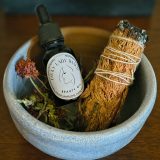 Beauty OilSeven plant oils for a soft, dewy, healthy looking face.
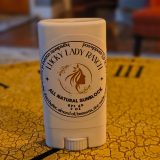 Mineral SunblockZinc oxide in a beeswax balm, without chemical UV filters.
 Beauty BarA gentle facial bar with rosehip, prickly pear and vitamin E.
Questions people ask
What is a minimalist skincare routine?
A routine that uses only the essentials: a gentle cleanser, a moisturizer or face oil, and sun protection in the morning. Extra products are added only when they solve a specific need.
Is it bad to use too many skincare products?
It can be. Layering many products increases your exposure to preservatives and fragrance and raises the chance of irritation. It also makes it hard to know which product is causing a problem.
How do I simplify my skincare routine?
List your products, group them by job, then remove one product a week, starting with the ones you are least sure about. Keep the cleanser, moisturizer and sunscreen, and only rebuy what your skin truly missed.
Can a face oil replace moisturizer and serum?
For many people, yes. A good plant oil blend applied to damp skin softens and helps reduce water loss. Some people with very dry or specific concerns still benefit from one additional product.
Sources and further reading
- American Academy of Dermatology (AAD), 10 Skin Care Secrets for Healthier Looking Skin
- American Academy of Dermatology (AAD), Sensitive Skin: How to Care for It
- Zirwas MJ, Stechschulte SA, Moisturizer allergy: diagnosis and management, Journal of Clinical and Aesthetic Dermatology (2008)
This guide is for general education and is not medical advice. If you have a skin condition, allergy, or are pregnant or nursing, talk with your doctor or a board certified dermatologist about the products that are right for you.