PFAS Free Makeup: Long Wear and Waterproof Formulas
Why PFAS show up in long wear and waterproof makeup, how to spot them on a label, and simple ways to choose PFAS free makeup without losing all staying power.

Key takeaways
- PFAS are fluorinated chemicals prized for repelling water and oil, which is why they appear in long wear and waterproof makeup.
- A 2021 study found high fluorine levels most often in waterproof mascara, long lasting lip products and liquid foundation.
- Look for PTFE and any ingredient containing perfluoro, polyfluoro or fluoro, but know that some PFAS are contaminants and never appear on the label.
- Several US states now restrict intentionally added PFAS in cosmetics, so PFAS free options are becoming easier to find.
If you have ever wondered why a mascara survives a rainstorm or a liquid lipstick lasts through dinner, part of the answer may be PFAS. These fluorinated chemicals are very good at repelling water and oil. They are also extremely persistent, which is why so many shoppers now look for PFAS free makeup. Here is how to recognize them and what to choose instead.
What PFAS are, in plain terms
PFAS (per and polyfluoroalkyl substances) are a large family of synthetic chemicals built around carbon fluorine bonds, among the strongest bonds in chemistry. That strength makes them useful in nonstick pans and stain resistant fabric, and it is why they are nicknamed "forever chemicals": many break down extremely slowly in the environment and some build up in the body over time.
Research on certain well studied PFAS, such as PFOA and PFOS, has linked exposure to effects on the immune system, cholesterol, the liver and development. The US Environmental Protection Agency set drinking water limits for several PFAS in 2024. Far less is known about the specific PFAS used in cosmetics, and how much passes through skin is still being studied. Our main site article on PFAS forever chemicals in personal care covers the broader science.
Why makeup uses them
In makeup, PFAS mostly show up for performance:
- Water and sweat resistance in mascara, eyeliner and setting products.
- Transfer resistance in liquid lipstick and long wear foundation.
- Smooth, silky slip in pressed powders and eyeshadow (PTFE is a common texture enhancer).
- Even spreading of oils and pigments across the skin.
A 2021 study from researchers at the University of Notre Dame tested more than 200 cosmetics sold in North America for fluorine, a marker for PFAS. High fluorine levels were most common in waterproof mascara, long lasting lipstick and liquid foundation. Many of the products with high fluorine did not list any PFAS on the label, which suggests some come in as contaminants or as part of raw materials.
Label names to look for
You will not see "PFAS" on an ingredient list. Watch for these instead:
- PTFE (polytetrafluoroethylene)
- Anything with perfluoro in the name: perfluorodecalin, perfluorohexane, perfluorononyl dimethicone
- Anything with polyfluoro or fluoro: polyperfluoromethylisopropyl ether, C9-15 fluoroalcohol phosphate
- Perfluorooctyl triethoxysilane, often used to coat pigments so they resist water
A simple shortcut: if "fluoro" appears anywhere in an ingredient name, look it up before you buy. Because some PFAS are not listed, the most reliable approach is to choose brands that state they test for or exclude PFAS, and to favor simple formulas for products you wear near your eyes and lips.
Which products to check first
| Product | Why PFAS may be used | Lower risk alternative |
|---|---|---|
| Waterproof mascara | Water resistance and smudge proofing | A washable, tubing or water resistant mascara with no fluoro ingredients |
| Liquid lipstick | Transfer resistance | A balm, cream or bullet lipstick with waxes and plant oils |
| Long wear foundation | Sweat and oil resistance | A mineral powder or simple tinted cream |
| Pressed powder and shadow | PTFE for silky texture | Mica, silica or kaolin based powders |
| Setting spray | Film forming and water resistance | Skip it, or blot with a tissue instead |
What the law says now
Rules are changing quickly. Several US states, including California, Colorado, Maryland and Minnesota, have passed laws restricting intentionally added PFAS in cosmetics, with others following. The federal Modernization of Cosmetics Regulation Act of 2022 (MoCRA) directed the FDA to assess the use and safety of PFAS in cosmetics. Because "intentionally added" is the usual legal standard, trace contamination may still occur even in compliant products.
The practical result is good news for shoppers: many brands have reformulated, and PFAS free claims are much more common than they were a few years ago.
Living with a little less staying power
The honest tradeoff is that PFAS free makeup can wear slightly differently. A few habits close most of the gap:
- Prep the skin, then wait. Let a light moisturizer or a few drops of facial oil absorb for a few minutes before base. Our guide on how to choose a facial oil helps you pick one that suits your skin.
- Use thin layers. Two thin coats of mascara hold better than one heavy coat.
- Blot instead of piling on powder during the day.
- Choose tubing mascara if you need water resistance; it forms small polymer tubes around lashes that slide off with warm water. Our article on clean mascara for sensitive eyes has more tips.
- Reapply lip color. A balm based tint takes seconds to refresh. The tinted version of our beeswax Lip Balm is easy to carry for exactly that.
Questions to ask a brand
Because some PFAS are not listed on labels, it is fair to ask a company directly. Useful questions include: Do you intentionally add any fluorinated ingredients? Do you test finished products or raw materials for total fluorine? Are your pigments coated, and if so, with what? A brand that answers clearly and specifically is usually one that has thought about the issue. Vague replies such as "all our products are safe" tell you very little.
Small makers with short ingredient lists often have the easiest answers, since there are fewer raw materials to trace.
An easier removal routine
One bonus of going PFAS free is gentler evenings. Water resistant, long wear products are designed not to come off, which often means harsh removers and lots of rubbing. Simpler makeup usually melts away with a plant oil or a mild cleanser. See our guide to removing makeup without harsh chemicals for a step by step routine.
Closing thoughts
PFAS free makeup is one of the clearest wins in chemical free beauty. The ingredients are easy to spot once you know the "fluoro" pattern, alternatives are widely available, and the main cost is a quick touch up now and then. For a broader look at which makeup ingredients to read for, our list of makeup ingredients to avoid is a good next step. At Lucky Lady Ranch, we keep our formulas simple so there is nothing persistent left behind, on your skin or in the water.
From the ranch
Made in small batches, without the ingredients discussed above.
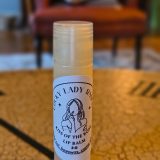 Lip BalmLip Love: our beauty oil blend with shea, cocoa butter and beeswax.
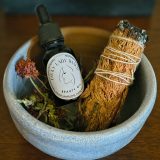 Beauty OilSeven plant oils for a soft, dewy, healthy looking face.
Questions people ask
Does waterproof mascara contain PFAS?
Not all of it, but a 2021 study found waterproof mascara was among the product types most likely to show high fluorine levels, a marker for PFAS. Check for PTFE and fluoro ingredients, or choose a brand that states it is PFAS free.
How do I know if my makeup has PFAS?
Look for PTFE and any ingredient containing perfluoro, polyfluoro or fluoro. Some PFAS enter as contaminants and are not listed, so brands that test for PFAS offer more assurance.
Are PFAS absorbed through the skin?
Research suggests some PFAS can pass through skin, though absorption varies by compound and is still being studied. Products used near the eyes and lips may also be swallowed or contact mucous membranes.
Is PTFE in makeup harmful?
PTFE is a large polymer that is not thought to be absorbed well through skin. The concern is that its production has historically involved other PFAS and that it persists in the environment, so many shoppers avoid it.
Are PFAS banned in cosmetics?
There is no nationwide US ban yet. Several states, including California, Colorado, Maryland and Minnesota, restrict intentionally added PFAS in cosmetics, and the FDA was directed by MoCRA to assess their use.
Sources and further reading
- Whitehead HD et al., Fluorinated Compounds in North American Cosmetics, Environmental Science and Technology Letters (2021)
- US Food and Drug Administration (FDA), Per and Polyfluoroalkyl Substances (PFAS) in Cosmetics
- US Environmental Protection Agency (EPA), PFAS National Primary Drinking Water Regulation (2024)
- Modernization of Cosmetics Regulation Act of 2022 (MoCRA)
- California Assembly Bill 2771, Cosmetic Products: Safety (2022)
- Agency for Toxic Substances and Disease Registry (ATSDR), Toxicological Profile for Perfluoroalkyls
This guide is for general education and is not medical advice. If you have a skin condition, allergy, or are pregnant or nursing, talk with your doctor or a board certified dermatologist about the products that are right for you.